Artificial Intelligence-based Uncertainty Quantification: Importance, Challenges, and Solutions
Artificial intelligence models and in particular deep neural networks achieve best-in-class performance, scale effectively with data, are fully transferable and automatically extract useful information for decision making. New advances in deep learning have already ignited an explosion of artificial intelligence applications for solving challenging problems across a range of previously closed applications, as diverse as autonomous vehicles/robots, cancer diagnosis and drug discovery. Despite their unprecedented discriminative power, deep learning models are prone to making mistakes without any warning in situations with rare or noisy training data. These models are systematically poor at quantifying predictive uncertainties. Purely relying on the current state-of-the-art artificial intelligence models in safety critical applications or human-rich environments could lead to catastrophes.
Outline
In this tutorial, we will provide an accessible and extensive overview on recent advances on AI-based uncertainty quantification. We will discuss a number of recent results on extending uncertainty quantification techniques to deep neural networks. Applications of these algorithms for developing uncertainty-aware systems will be then reviewed and discussed. Finally, we will explore the frontiers and limitations of the current algorithms.
Expected length of the tutorial: 3h
The level of the tutorial: Introductory
| Session | Duration |
|---|---|
|
What uncertainty is and why it matters Different types of uncertainty (theoretical) Uncertainty in Classification and Regression Tasks Overall view of uncertainty quantification techniques |
60 mins |
| Comprehensive review of uncertainty quantification methods (direct and sampling free methods, Bayesian methods, ensemble approaches) | 60 mins |
|
AI-based applications of uncertainty quantification Current shortcomings and gaps in uncertainty quantification methods Future opportunities |
60 mins |
Biography of Presenters
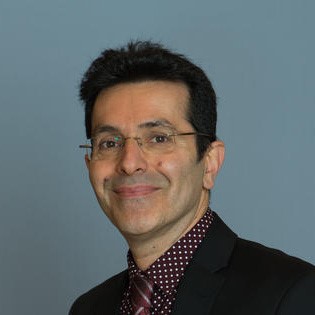
Professor Saeid Nahavandi received a Ph.D. from Durham University, U.K. in 1991. He is an Alfred Deakin Professor, Pro Vice-Chancellor, Chair of Engineering, and the Founding Director of the Institute for Intelligent Systems Research and Innovation at Deakin University. His research interests include modelling of complex systems, robotics and haptics. Professor Nahavandi is Editor-In-Chief: IEEE SMC Magazine, the Senior Associate Editor: IEEE Systems Journal, Associate Editor of IEEE Transactions on Systems, Man and Cybernetics: Systems, and IEEE Press Editorial Board member. Professor Nahavandi is a Fellow of IEEE (FIEEE), Engineers Australia (FIEAust), the Institution of Engineering and Technology (FIET). Saeid is a Fellow of the Australian Academy of Technology and Engineering (ATSE). He has published more than 900 journal and conference papers.
Assoc. Prof. Abbas Khosravi received his PhD from Deakin University in 2010. He is currently an associate professor with the Institute for Intelligent Systems Research and Innovation at Deakin University. His current research interests include machine learning, artificial intelligence, and their applications for data mining, computer vision, optimization, and operation planning. He has received several prestigious grants to conduct fundamental and applied research in the field of AI-based uncertainty quantification. He has published more than 200 journal and conference papers and his h-index is 37 based on Google Scholar.

Where
Canberra, Australia
When
1-4 December 2020
ieeessci2020 at gmail . com