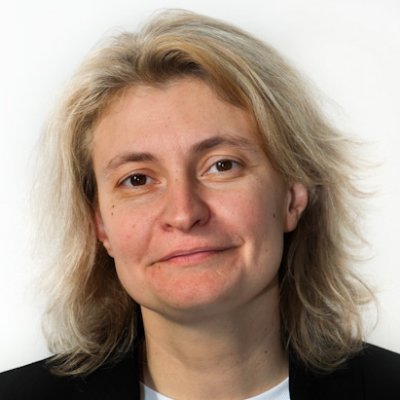
Sylvie Thiebaux
Title: Distributed Intelligence for a Consumer-Centric Electricity Grid
Australia has the largest uptake of residential rooftop solar per capita, and within the next few decades, a large fraction of its electricity will be produced by consumers. Achieving this in a cost-effective and reliable way requires the ability to coordinate the actions of these consumer-owned energy systems so that they benefit not only their owners but also the electricity network. AI, optimisation, and computational intelligence are all essential in tackling this problem. In this talk I'll focus on the CONSORT project, a multi-disciplinary collaboration between academia and industry which developed and trialled this coordination capability on Bruny Island in Tasmania. I will explain the crucial role played by planning, scheduling, optimisation, forecasting, and game theory, in coordinating consumer-owned batteries to manage network constraints, doubling the value of these batteries for the network, and providing a new source of revenue for consumers.
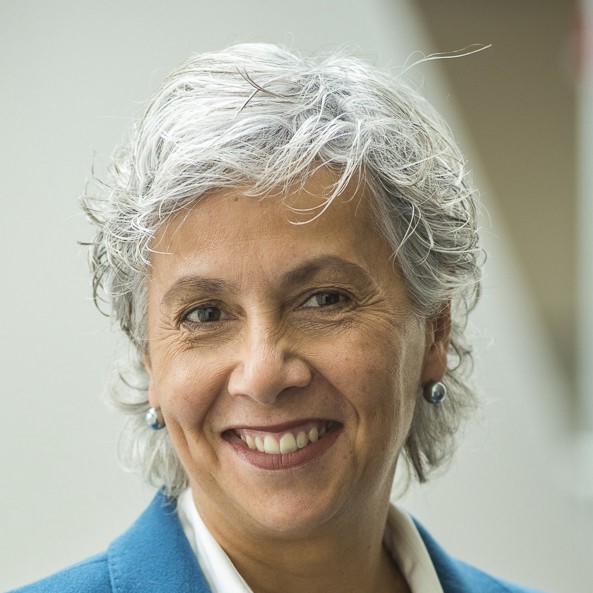
Una-May O'Reilly
Title: Natural and Artificial Adversarial Intelligence
Natural systems are prime examples of adversarial behaviors and the evolution of adversarial populations. These inspire my interest in artificial adversarial intelligence. I will describe a framework that employs competitive coevolutionary algorithms, modeling, and simulation to drive stylized adversarial dynamics as they could emerge in cybersecurity settings.
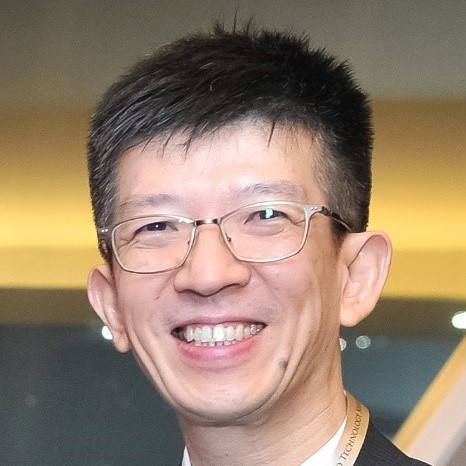
Haizhou Li
Title: Recent Advances in Selective Auditory Attention
Humans have a remarkable ability to pay their auditory attention only to a sound source of interest, that we call selective auditory attention, in a multi-talker environment or a Cocktail Party. However, signal processing approach to speech separation and/or speaker extraction from multi-talker speech remains a challenge for machines. In this talk, we study the deep learning solutions to monaural speech separation and speaker extraction that enable selective auditory attention. We also introduce their applications in speech recognition, speaker recognition, and hearing aids. We discuss the computational auditory models, technical challenges and the recent advances in the field.
Where
Canberra, Australia
When
1-4 December 2020
ieeessci2020 at gmail . com