Artificial Intelligence using Neural Networks: From Perceptron to Deep Neural Networks
From the humble beginning of a perceptron, the field of artificial neural networks has grown leaps and bounds. From simple data classification, it is now capable of easy face recognition, voice recognition etc., opening up limitless applications. This comprehensive talk will attempt to give a systematic overview of this field, emphasizing on concepts and mechanisms. The necessary background material on numerical optimization will also be reviewed. The workshop will begin with the idea of perceptron and slowly build on to the state of the state-of-the art deep neural networks (DNN), especially using the widely used convolution neural networks architecture. Towards the end, this talk will include a brief exposure about the utility of DNN on the selection of suitable sites on an asteroid for safe-landing.
Outline
TBC
Expected length of the tutorial: 3h
The level of the tutorial: Introductory
Biography of Presenter
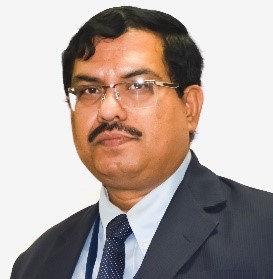
Dr. Radhakant Padhi is currently working as a Professor in the Department of Aerospace engineering, Indian Institute of Science, Bangalore. He did his Masters and Ph.D. in Aerospace Engineering from IISc Bangalore and Missouri University of Science and Technology (MST)–Rolla, USA respectively. He joined the IISc, Bangalore as a faculty in December 2003 and is continuing over there since then. He was also a scientist in RCI (DRDO), Hyderabad for a year during 1996-97.
Dr. Padhi is a Fellow of Indian National Academy of Engineers (INAE), a Fellow of Institution of Engineers (India), a Fellow of Institution of Electronics and Telecommunication Engineers (IETE), an Associate Fellow of American Institute of Aeronautics and Astronautics (AIAA), a Senior Member of IEEE and a Council member of the International Federation of Automatic Control (IFAC). He is also a member of Technical Committee on Aerospace in both IEEE and IFAC. He is a founding member and a past president of the Automatic Control and Dynamic Optimization Society (ACDOS), which is a National Member Organization of IFAC in India. He is a life member of Aeronautical Society of India, Systems Society of India and Soft Computing Research Society. He is also a steering committee member of Asian Control Association.
Dr. Padhi’s main research interest is on synthesis algorithms in optimal and nonlinear control as well as state estimation. He works on diverse application areas such as control and guidance of aerospace vehicles, biomedical systems, mechanical systems, distributed parameter systems, and industrial process control. He has over 250 publications in international journals and conferences and has received many awards and honours for his research contributions. He is a member of the technical review committee in DRDO and ISRO for several projects of national importance and has also directly contributed to various programs of DRDO and ISRO through intensive collaborative research. The control and guidance techniques developed by Dr. Padhi are received well across the globe.
Where
Canberra, Australia
When
1-4 December 2020
ieeessci2020 at gmail . com