Handling Data Streams in Continual and Rapidly Changing Environments
Streaming data is a research area of growing interest as a result of rapid information flow which ought to be handled efficiently while retaining uncompromised accuracy. The underlying challenge of data streams is observed in the never-constant system behaviour making the self-evolving characteristic of predictive model necessary to keep pace with the drifting data distributions with uncertain speeds, types and magnitudes. While the self-evolving model has been explored in the previous study, further study is urgently needed due to the increase of problem’s complexity: nonlinearity, feature space, target space and its variation.
Outline
This tutorial provides insight for building dynamic models for varied data stream problems. It starts with the talk on flexible deep neural network with dynamic network width and depth. This DNN is capable of starting its learning process from scratch without a pre-initialized network structure. Its hidden node and hidden layer are dynamically added and pruned in respect to dynamic of data streams. The second part of the tutorial touches upon the topic of multistream mining being the transfer learning problem across multiple streaming processes. That is, it handles many streaming processes having both covariate shift and asynchronous drift properties with the absence of any labelled samples in the target domain. All of which are handled under a flexible deep neural network. The last part of the talk discusses the emerging problem of weakly supervised learning under streaming condition. Two weakly supervised learning problems, sporadic access of ground truth and infinitely delayed access of ground truth, are tackled.
Expected length of the tutorial: 3h
The level of the tutorial: Introductory
| Session | Duration |
|---|---|
| Self-evolving Deep Neural Networks from Data Streams: Autonomous Deep Learning (ADL) | 30 mins |
| Self-Evolving Deep Neural Networks from Data Streams: Neural Networks with Dynamically Evolved Capacity (NADINE) | 30 mins |
| Multi-stream Mining: Autonomous Transfer Learning (ATL) | 30 mins |
| Multi-stream Mining: Weakly Supervised Transfer Networks (WeTransfer) | 30 mins |
| Weakly Supervised Learning from Data Streams: ParsNet | 30 mins |
Biography of Presenter
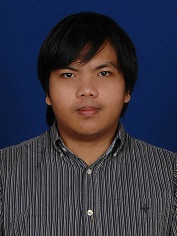
Dr. Mahardhika Pratama received his PhD degree from the University of New South Wales, Australia in 2014. Dr. Pratama is a tenure-track assistant professor at the School of Computer Science and Engineering, Nanyang Technological University, Singapore. He worked as a lecturer at the Department of Computer Science and IT, La Trobe University from 2015 till 2017. Prior to joining La Trobe University, he was with the Centre of Quantum Computation and Intelligent System, University of Technology, Sydney as a postdoctoral research fellow of Australian Research Council Discovery Project. Dr. Pratama received various competitive research awards in the past 5 years, namely the Institution of Engineers, Singapore (IES) Prestigious Engineering Achievement Award in 2011, the UNSW high impact publication award in 2013 and 2014, IEEE TFS prestigious publication award in 2018, Amity researcher award. Dr. Pratama has published in top journals and conferences and edited one book, and has been invited to deliver keynote speeches in international conferences. Dr. Pratama has led five special sessions and two special issues in prestigious conferences and journals. He currently serves as an editor in-chief of International Journal of Business Intelligence and Data Mining and a consultant at Lifebytes, Australia. Dr. Pratama is a member of IEEE, IEEE Computational Intelligent Society (CIS) and IEEE System, Man and Cybernetic Society (SMCS), and Indonesian Soft Computing Society (ISCINA). His research interests involve autonomous deep learning, data stream, control system, predictive maintenance and autonomous vehicle.
Where
Canberra, Australia
When
1-4 December 2020
ieeessci2020 at gmail . com