Tensor for Machine Learning
Many classical machine learning methods rely on representation and computation in the form of vectors and matrices, where a lot of naturally multi-dimensional data is unfolded into matrix for processing. However, the multi-linear structure would be lost in such vectorization or matricization, which leads to sub-optimal performance in processing. In fact, a natural representation for multi-dimensional data is tensor. The tensor computation based machine learning methods can avoid multi-linear data structure loss in classical matrix based counterparts, and widely be applied in computer vision, neuroscience, communication, psychometric, chemometrics, biometric, quantum physics, quantum chemistry.
Outline
This tutorial will first provide a basic coverage of tensor notations, preliminary operators, main tensor decompositions and their properties. Based on them, a series of tensor machine learning methods are presented, as the multi-linear extensions of classical dictionary learning, linear regression, deep neural network, matrix completion, principal component analysis, subspace cluster, etc. The experimental results for a number of applications are given, such as recommendation system, weather forecasting, image reconstruction, image denoising, illumination normalization, background extraction, pose estimation, etc.
Expected length of the tutorial: 3.5h
The level of the tutorial: Introductory
| Session | Duration |
|---|---|
| Introduction to Tensor: Preliminaries on Tensor Computation (20 minutes) Tensor Decomposition (40 minutes) |
60 mins |
| Learning Techniques: Tensor Dictionary Learning (20 minutes) Tensor Regression (20 minutes) Tensor Neural Network (20 minutes) Tensor Completion (20 minutes) Tensor Principal Component Analysis (20 minutes) Tensor Subspace Cluster (20 minutes) |
120 mins |
| Selected Discussion: Advanced Tensor Networks (30 minutes) |
30 mins |
Biography of Presenter
Yipeng Liu is an associate professor with School of Information and Communication Engineering, University of Electronic Science and Technology of China (UESTC), Chengdu, China. He received the BSc degree in biomedical engineering and the PhD degree in information and communication engineering from UESTC, Chengdu, China, in 2006 and 2011, respectively. In 2011, he was a research engineer at Huawei Technologies. From 2011 to 2014, he was a research fellow at the University of Leuven, Leuven, Belgium. Since 2014, he has been an associate professor with UESTC, Chengdu, China.
His main research interest is tensor signal processing. He is an IEEE senior member. He has been an associate editor of IEEE Signal Processing Letters and a lead guest editor of Signal Processing: Image Communication.
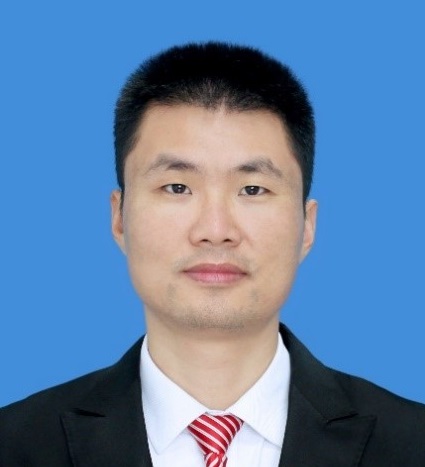
Yipeng Liu
School of Information and Communication Engineering, University of Electronic Science and Technology of China, China
Where
Canberra, Australia
When
1-4 December 2020
ieeessci2020 at gmail . com