IEEE Symposium on Evolving and Autonomous Learning Systems (IEEE EALS)
IEEE SSCI 2020 will run as a virtual conference.
The EALS 2020 Symposium will be a focal point for presentation of the recent advanced research results and industrial applications in the area of evolving and autonomously learning systems. The role of autonomous learning from (big) data (streams) is growing with the exponential explosion of amounts, complexity and hetero-genuous nature of the data we are living through. The traditional methods of machine learning, probabilistic and even computational intelligence techniques such as neural networks and fuzzy sets and systems require in practice a lot of handcrafting, make restrictive assumptions and are often not directly applicable to dynamically changing, evolving data with non-stationary properties, of hetero-genuous nature (mixing signals, image/video, text), categorical variables, etc. Extracting autonomously interpretable models which are not fixed, but dynamically evolving is a key challenges to be addressed. The Symposium has established track record and aims to keep and build upon this with the current event, EALS 2020.
Topics
New Adaptive and Evolving Learning Methods:
- Evolving in Dynamic Environments
- Drift and Shift in Data Streams
- Self-monitoring Evolving Systems
- Evolving Decision Systems / Evolving Perceptions
- Self-organising Systems/ Evolving Neuro-fuzzy Systems
- Neural Networks with Evolving Structure
- Non-stationary Time Series Prediction with ES
- Automatic Novelty Detection in Evolving Systems
- Stability, Robustness, Unlearning Effects
- Structure Flexibility and Robustness in Evolving Systems
- Evolving Fuzzy Clustering Methods
- Evolving Fuzzy Rule-based Classifiers
- Evolving Intelligent Systems for Time Series Prediction
- Evolving Intelligent System State Monitoring and Prognostics
- Evolving Intelligent Controllers
- Evolving Fuzzy Decision Support Systems
- Evolving Consumer Behaviour Models
Real-world application:
- Robotics and Control Systems
- Industrial Applications
- Data Mining and Knowledge Discovery
- Intelligent Transport
- Bio-Informatics
- Defence
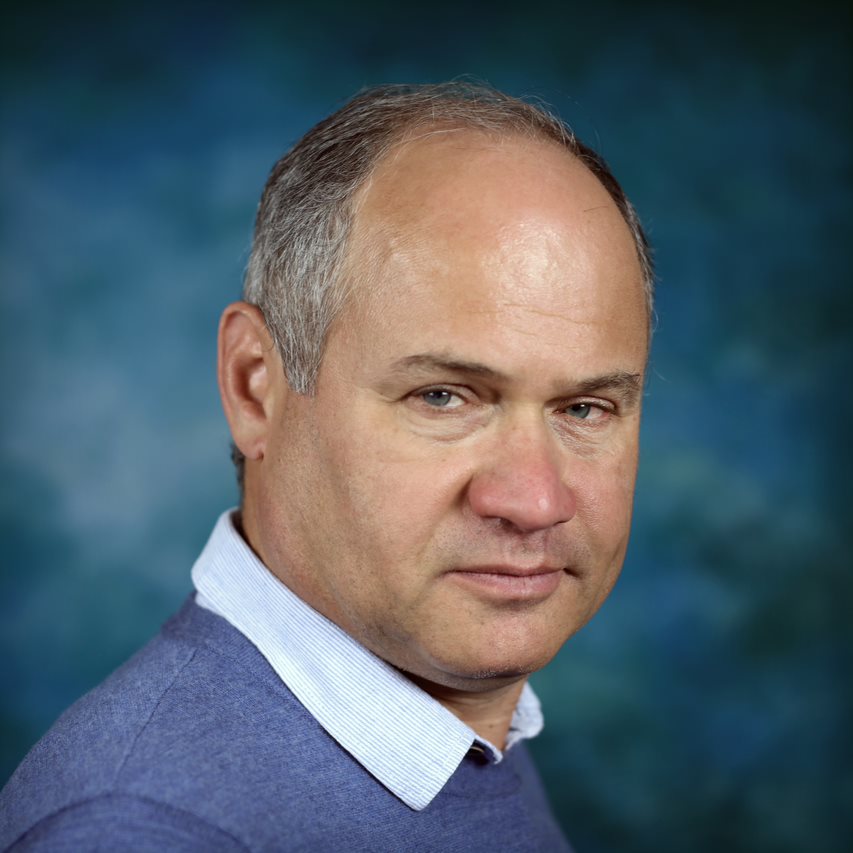
Symposium Chairs

Program Committee
- Abdelhamid Bouchachia, University of Bournemouth, UK
- Bruno Sielly Jales Costa, Facebook, Menlo Park, USA
- Rashmi Dutta Baruah, IIT, India
- Massimo Esposito, CNR, Italy
- Fernando Gomide, University of Campinas, Brazil
- CT Lin, University of Technology Sydney, Australia
- Lazaros Iliadis, Aristotle University of Thessaloniki, Greece
- Jose Antonio Iglesias, University Carlos III, Spain
- Janusz Kacprzyk, Polish Academy of Sciences, Poland
- Dmitry Kangin, University of Exeter, UK
- Daniel Leite, Federal University of Lavras, Brazil
- Edwin Lughofer, University of Linz, Austria
- Valeri Mladenov, Technical University - Sofia
- Moamar Sayed-Mouchaweh, University of Reims, France
- Radu-Emil Precup, Polytechnic Univ. of Timisoara, Romania
- Witold Pedrycz, University of Alberta, Canada
- Maharadhika Pratama, NTU, Singapore
- Leszek Rutkowski, Institute of Computational Intelligence, Poland
- Hai-Jun Rong, Xi'an Jiaotong University, China
- Araceli Sanchis, University Carlos III, Madrid
- Igor Skrjanc, University of Ljubljana, Slovenia
- Suresh Sundaram, NTU, Singapore
- Ronald Yager, Iona College, NY
- Xiaojun Zeng, Manchester University, UK
Where
Canberra, Australia
When
1-4 December 2020
ieeessci2020 at gmail . com