IEEE Symposium on Computational Intelligence in Feature Analysis, Selection and Learning in Image and Pattern Recognition (IEEE FASLIP)
IEEE SSCI 2020 will run as a virtual conference.
In image analysis and pattern recognition, the quality of the input data determines the quality of the output (e.g. accuracy), which is known as the GIGO (Garbage In, Garbage Out) principle. For a given problem, the input data to any machine learning or data mining algorithm is almost always expressed by a number of features (attributes or variables) showing different properties of the problem. Therefore, the quality of the feature space is a key for successfully solving any image analysis and pattern recognition problem.
Computational intelligence techniques, mainly evolutionary computation, neural networks, and fuzzy logic, have been shown to be effective tools in image analysis and pattern recognition. However, their performance is still limited or influenced when the feature space is of poor quality, which may be that the dimensionality is too high (i.e. the number of features is too big) leading to the "curse of dimensionality", features are not equally important, some features are irrelevant, redundant or even noisy, the original features are not informative enough, the features are not linearly separable, and so on. All these factors may lead to various performance limitations. For example in image classification problems, these will lead to low classification accuracy, a long training time, a complex classifier, etc.
The IEEE Symposium on Computational Intelligence in Feature Analysis, Selection, and Learning in Image and Pattern Recognition (FASLIP) aims to offer world-wide academic researchers in those fields as well as people from industry an opportunity to present their latest research and to discuss current developments and applications, besides fostering closer future interaction between members of the academic and industry communities. FASLIP welcomes contributions that investigate the new theories, methods or applications of different computational intelligence paradigms to feature analysis, selection, and learning in solving various image and pattern recognition tasks.
Topics
Authors are invited to submit their original and unpublished work to this symposium. Topics of interest include but are not limited to:
- Feature ranking/weighting
- Feature selection
- Feature extraction
- Feature construction
- Dimensionality reduction
- Multi-objective feature selection, construction or extraction
- Feature analysis on high-dimensional and large-scale data
- Analysis on computational intelligence for feature selection, construction, and extraction algorithms
- Evolutionary computation for feature analysis
- Neural networks for feature analysis
- Fuzzy logic for feature analysis
- Hybridisation of evolutionary computation, neural networks, and fuzzy logic for feature selection, construction, and extraction
- Hybridisation of evolutionary computation and machine learning, information theory, statistics, mathematical modelling, etc., for feature analysis
- Feature analysis in classification, clustering, regression, image analysis, and other tasks
- Real-world applications of computational intelligence for feature analysis, e.g. image sequences/analysis, face recognition, gene analysis, biomarker detection, medical data classification, diagnosis, and analysis, handwritten digit recognition, text mining, instrument recognition, power system, financial and business data analysis, etc.
Symposium Chairs

Bing Xue
School of Engineering and Computer Science, Victoria University of Wellington, New Zealand*
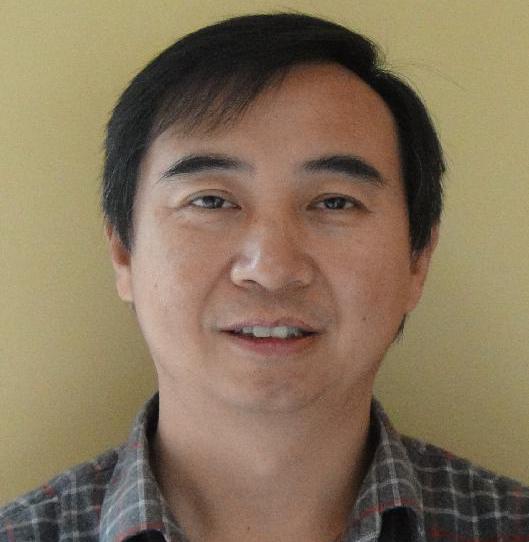
Mengjie Zhang
School of Engineering and Computer Science, Victoria University of Wellington, New Zealand


PC Members:
Hisao Ishibuchi, Tohoku University, Japan
Bing Xue, Victoria University of Wellington, New Zealand
Brijesh Verma, Central Queensland University, Australia
Mengjie Zhang, Victoria University of Wellington, New Zealand
Stefano Cagnoni, Universita degli Studi di Parma, Italy
Krzysztof Krawiec, Poznan University of Technology, Poland
Zexuan Zhu, Shenzhen University, China
Kai Qin, RMIT University, Australia
Kourosh Neshatian, University of Canterbury, New Zealand
Andy Song, RMIT University, Australia
Ivy Liu, Victoria University of Wellington, New Zealand
Lin Shang, Nanjing University, China
Yi Mei, Victoria University of Wellington, New Zealand
Zhongyi Hu, Wuhan University, China
Yue Xue, Nanjjing University of Information Science & Technology, China
Emrah Hancer, Department of Computer Engineering, Erciyes University, Turkey
Ben Niu, Shenzhen University, China
Aaron Chen, Victoria University of Wellington, New Zealand
Harith Al-Sahaf, Victoria University of Wellington, New Zealand
Urvesh Bhowan, IBM, Ireland
Mark Johnston, Worcester University, UK
Where
Canberra, Australia
When
1-4 December 2020
ieeessci2020 at gmail . com